

Why fermentation is the perfect team building activity
In a world of forced fun and awkward icebreakers, most team-building activities miss the mark.
Escape rooms. Trust falls. After-work drinks.
They’re often loud, competitive, or surface-level. And while they might entertain for an hour, they rarely leave a lasting impact.
Fermentation is different.
It’s collaborative, not competitive
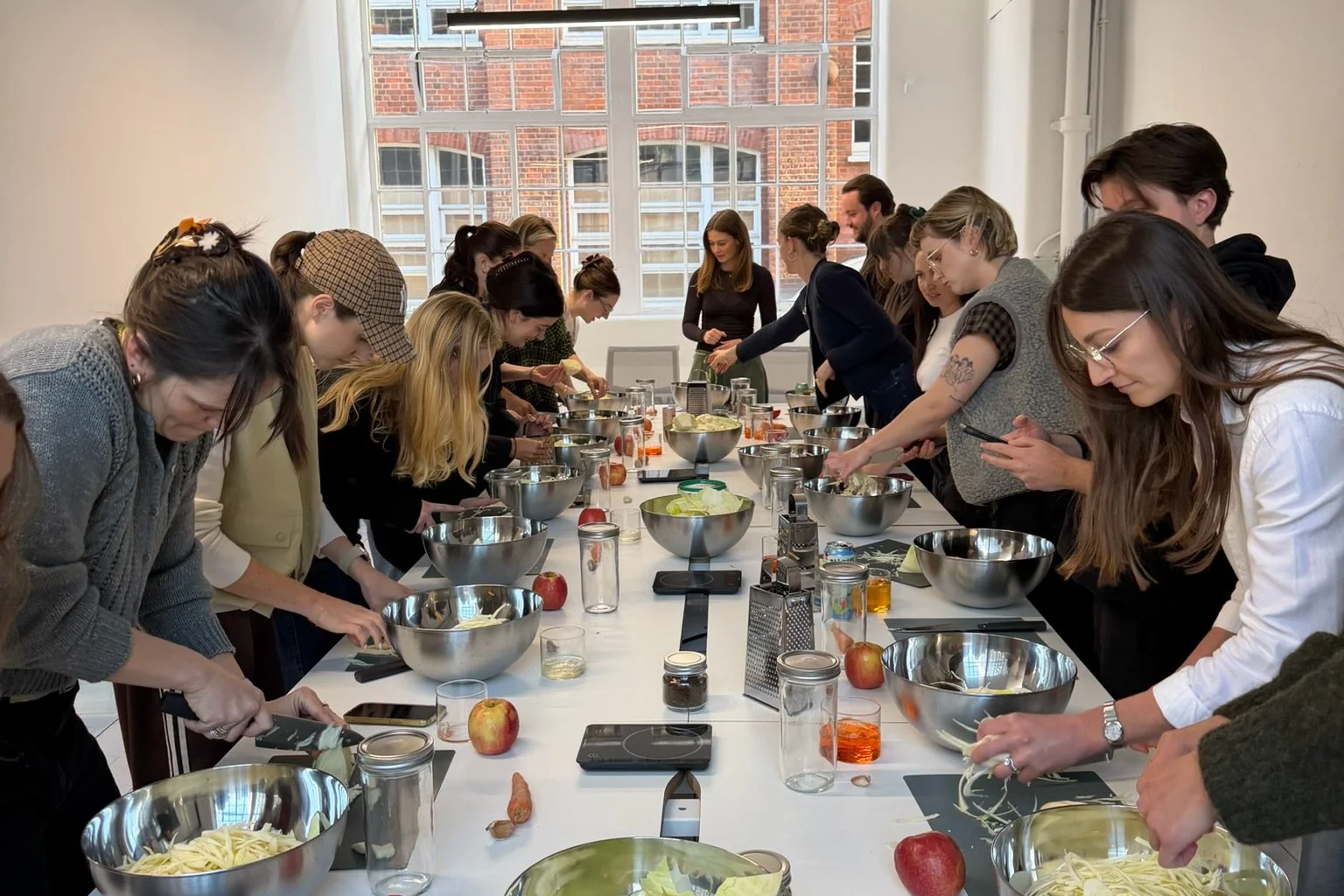
In a fermentation workshop, there’s no winner or loser. Instead, teams work side by side—chopping, tasting, mixing, experimenting.
It’s naturally collaborative.
People share ideas. Swap flavour combinations. Learn from each other. And because everyone starts as a beginner, hierarchies quietly dissolve.
It slows people down
Most corporate environments move fast. Constant emails. Back-to-back meetings. Endless notifications.
Fermentation asks the opposite.
It invites people to slow down. To work with their hands. To focus on something tangible. And in doing so, it creates space for real conversation—the kind that doesn’t happen in a meeting room.
It creates something meaningful
At the end of most team-building days, you’re left with… a memory.
At a fermentation workshop, you leave with something alive.
More than your average
event
Jars of kimchi, sauerkraut, or pickles—made by your own hands, shaped by your own choices. Something you’ll take home, share, and continue to experience over days and weeks.
It connects people beyond the workplace
There’s something quietly powerful about preparing food together.
It’s universal. Familiar. Human.
And in a setting that’s relaxed and hands-on, people connect in a way that feels natural—not forced.
A team experience that actually lasts
Fermentation doesn’t end when the workshop does.
Over the following days, those jars continue to transform—reminding your team of the experience, the conversations, and the shared moment of stepping away from the everyday.
If you’re looking for a team-building experience that’s thoughtful, grounded, and genuinely engaging, fermentation offers something refreshingly different.
