

The gut-brain connection: why your team’s gut health affects their work
We often think of productivity as something driven by mindset.
Focus. Motivation. Energy.
But increasingly, research—and lived experience—is pointing somewhere else:
The gut.
Your gut is more than digestion
Inside the human gut lives a vast ecosystem of bacteria—often referred to as the gut microbiome.
This ecosystem plays a role in far more than digestion. It influences mood, energy levels, and even cognitive function.
It’s why the gut is often called the “second brain.”
The gut-brain connection
The gut and brain are in constant communication.
When the gut is supported—through diverse, nutrient-rich foods—people often report:
More stable energy
Improved focus
Better mood regulation
When it’s not, the opposite can show up: fatigue, brain fog, and dips in concentration.
Where fermentation comes in
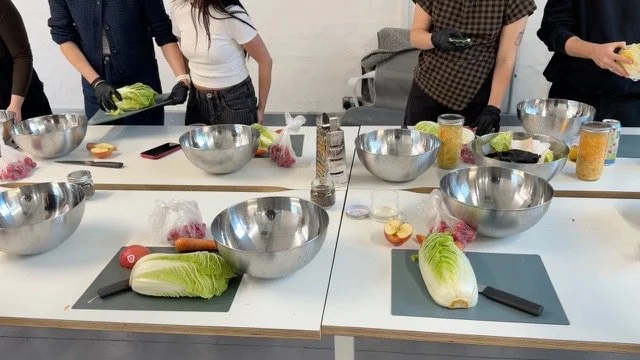
Fermented foods—like kimchi and sauerkraut—are rich in beneficial bacteria.
These foods help support a more diverse gut microbiome, which in turn supports overall wellbeing.
At Vinegar + Salt, fermentation isn’t framed as a quick fix.
It’s an invitation to reconnect with how food supports the body—slowly, consistently, and sustainably.
Why this matters in the workplace
A team that feels well works differently.
Not just more productively—but more creatively, collaboratively, and consistently.
Wellness initiatives often focus on surface-level perks. But supporting gut health is about something deeper: creating the conditions for people to feel good in their bodies.
A more grounded approach to corporate wellness
Workshops centred around fermentation offer both education and experience.
They don’t just tell people what to eat—they show them how to create it.
And in doing so, they give teams something they can carry into daily life.
Because when people feel better, they work better.
It’s that simple.
